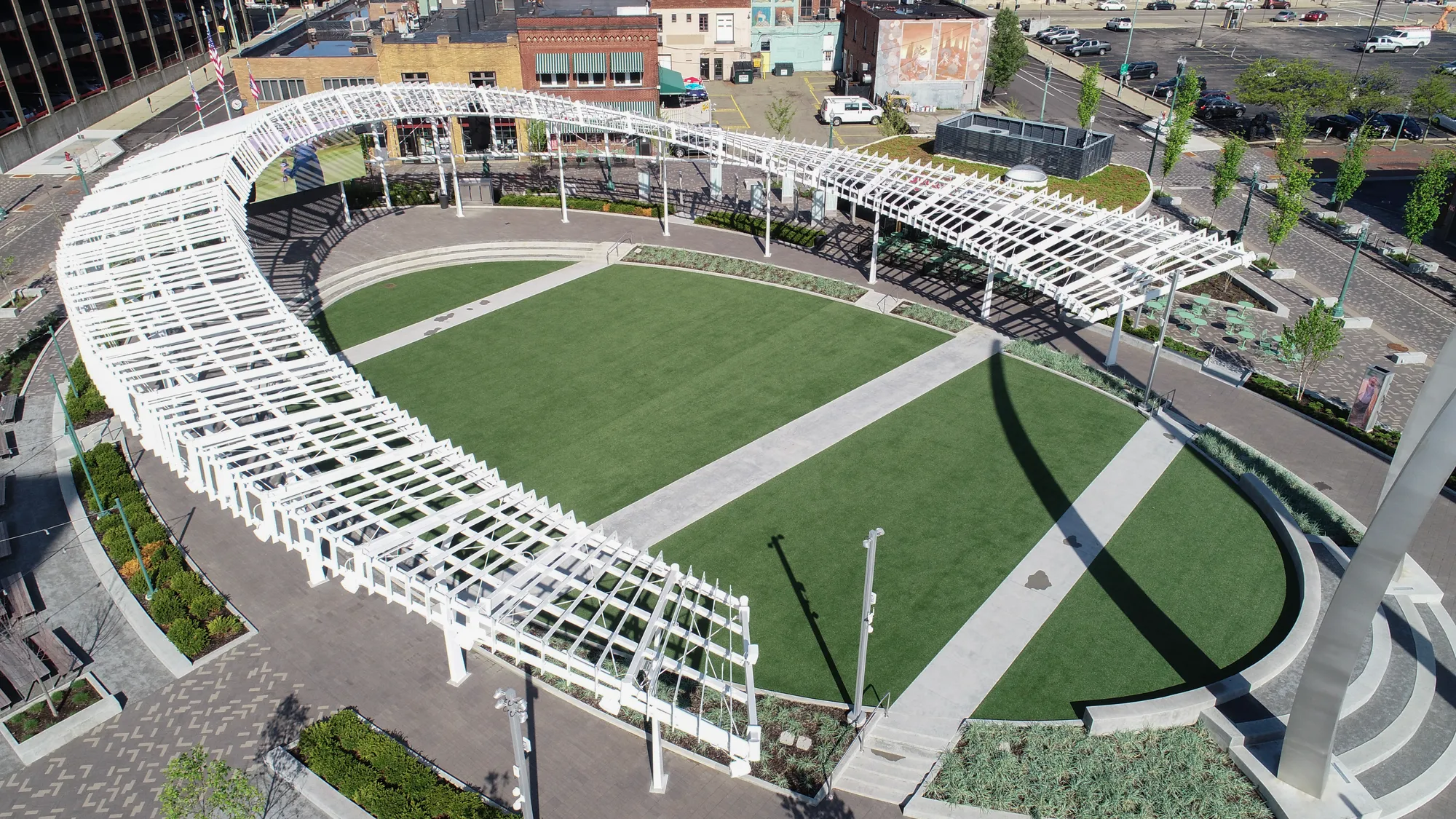
When the sun beats down or the weather turns stormy, even the best-designed plaza, park, or retail courtyard becomes a space people will actively avoid.
That’s the problem commercial shade structures solve, and why they’ve become an essential part of how public and commercial environments are designed. Shade structures are no longer optional amenities but essential architectural features that directly impact usability, comfort, and traffic flow.
The demand for better outdoor experiences is growing. A well-engineered shade system will reduce heat, extend the hours and months during which a space is comfortably usable, and enhance the overall look and feel of a commercial or public environment.
At Jones, we design, engineer, fabricate, and install custom shade systems for commercial and public environments. This guide covers what commercial shade structures are, the types available, where they are used, and what to look for when selecting a system and a partner.
What Are Commercial Shade Structures?
Heat drives people indoors. Shade brings them back outside.
Commercial shade structures are systems designed to reduce direct sun exposure and protect against the elements in outdoor environments. They are found in high-use public and commercial settings, such as parks, plazas, retail centers, campuses, and transit areas.
A secondary benefit is preserving the condition of outdoor equipment and furnishings, since shade structures limit direct UV exposure.
Types of Shade Structures
Each commercial outdoor shade structure is built for specific conditions:
Cantilever shade canopies use a single offset support column to create an unobstructed shaded area beneath. They are well-suited for seating zones, pool decks, and pedestrian areas where posts in the middle of the space would be impractical.
Fabric shade sails are tensioned fabric panels anchored between fixed points to create angled, geometry-driven shade coverage. Sails are a lightweight and visually striking option, commonly used in parks, playgrounds, and casual outdoor gathering areas.
Modular shade pavilions are freestanding, prefabricated shade units that can be configured and scaled to fit a wide range of site footprints. They offer flexibility for parks, transit hubs, and commercial outdoor spaces that need reliable coverage without fully custom construction.
Pergola-style shade systems use an open overhead lattice or beam structure to create partial shade and define outdoor spaces. Pergolas balance light filtration with visual appeal in retail, hospitality, and campus environments.
Solar-integrated shade systems combine structural shade coverage with photovoltaic panels to generate renewable energy while protecting users from sun exposure. They are a practical solution for parking areas, campuses, and civic spaces with sustainability goals.
Steel frame canopy structures are rigid, permanent overhead systems built from structural steel and typically finished with metal or fabric roofing panels. They provide long-term durability for high-traffic commercial and civic installations.
Tensile membrane structures use high-strength, flexible fabric membranes supported by a steel frame or cable system to create dramatic, freeform overhead coverage. They make a popular choice when aesthetic impact is as important as functional performance.
Where Shade Structures Are Used
When outdoor environments are comfortable, people use them more – and that increased activity has real value for developers, municipalities, and brands.
- In public parks and recreation areas, shade keeps families on the playground longer and makes athletic fields usable during peak heat hours.
- In retail and dining environments, shaded patios and courtyards become desired destinations, driving foot traffic and encouraging guests to linger.
- On school and university campuses, shade supports outdoor learning spaces and makes walkways and gathering areas more comfortable throughout the academic year.
- At sports and entertainment venues, large-span shade systems protect spectators and participants from heat and weather exposure.
- Transit stops and transportation hubs benefit significantly from overhead coverage, providing basic weather protection that improves the daily experience for commuters.
- Corporate campuses use shade to activate outdoor areas for employees, turning underused exterior space into functional environments.
- Parking areas and pedestrian walkways with proper shade reduce heat stress for people moving between buildings.
- Shopping malls and open-air retail centers use shade structures to cover pedestrian corridors and entrances, keeping shoppers comfortable and encouraging longer visits.
- In plazas and civic spaces, shade creates a welcoming environment that encourages community use and repeat visits.
Key Benefits of Shade Structures
Take a look at some of the benefits of outdoor shade structures.
Temperature Reduction
Shaded surfaces can remain dramatically cooler than those in direct sun.
Block UV Rays
A quality commercial shade structure can block a significant portion of dangerous UV rays, making the space genuinely safer for everyone who uses it.
Extends Productivity
Outdoor areas that become too hot to use by mid-morning are effectively losing hours of potential operations every day. Shade brings those hours back.
Protect Equipment, Furniture, and Surfaces
These items last longer when they are not subject to constant direct sun exposure, which reduces long-term maintenance costs.
Visual Definition
A well-designed shade system makes the architectural space feel complete. It creates a sense of enclosure, marks gathering zones, and contributes to the overall character of a site.
Design and Performance Considerations
A shade structure that looks good but fails structurally is not a solution. Effective design starts before fabrication with sun path analysis, structural engineering for wind and weather loads, and material selection suited to the site's climate.
Durability is also non-negotiable. Steel frames need proper coating for corrosion resistance, and fabric membranes must hold up under UV exposure and moisture for years. Maintenance needs and expected lifespan should factor into every material decision, since a structure that needs constant repair quickly becomes a liability.
Integration with the surrounding architecture matters too. The best systems are designed as part of their environment, not dropped into it afterward.
Why Custom Matters in Shade Design
A standard structure can cover an area, while a custom-designed system can define one. When geometry, materials, scale, and finish are developed specifically for the site and brand, the result fits both visually and functionally.
This matters even more for organizations managing multiple locations. A standardized custom system keeps parks, retail centers, or campus spaces visually consistent across markets, while still adapting to each site's wind loads, sun angles, and local codes upfront.
Custom design also unlocks options off-the-shelf systems can't offer, such as coverage density, integrated lighting, and unique geometry that turn a functional structure into a signature feature of the space.
Choosing a Partner for Shade Structures
The quality of a shade structure comes down to the quality of the partner behind it.
Engineering Capability
Your chosen provider must conduct structural calculations, load analyses, and design documentation to ensure the system operates safely and reliably throughout its full lifespan.
Fabrication Quality
How well will the finished product hold up under real-world conditions?
Installation Experience
Companies that self-install have a distinct advantage, since they have more control and accountability throughout the project.
Turnkey Delivery
Working with a single partner from concept through installation eliminates the coordination gaps that arise when design, fabrication, and installation are handled separately.
Permitting / Code Compliance
Navigating local requirements takes experience that only comes from doing it repeatedly and at scale.
With 300,000 square feet of manufacturing space across multiple facilities, self-performed installation teams, and a nationwide logistics program, Jones can execute commercial shade structure projects wherever they need to happen.
Partner with Jones for Commercial Shade Structures
Whether the goal is to extend seasonal usability, improve visitor safety, or elevate the design of a public or commercial environment, the right shade system delivers on all fronts.
Jones is ready to help. We design, engineer, fabricate, and install custom shade systems built for the demands of commercial and public environments. We are ready to exceed your expectations and meet the exact standards your project requires.
Contact us today to explore your options, request a design consultation, or start a project!