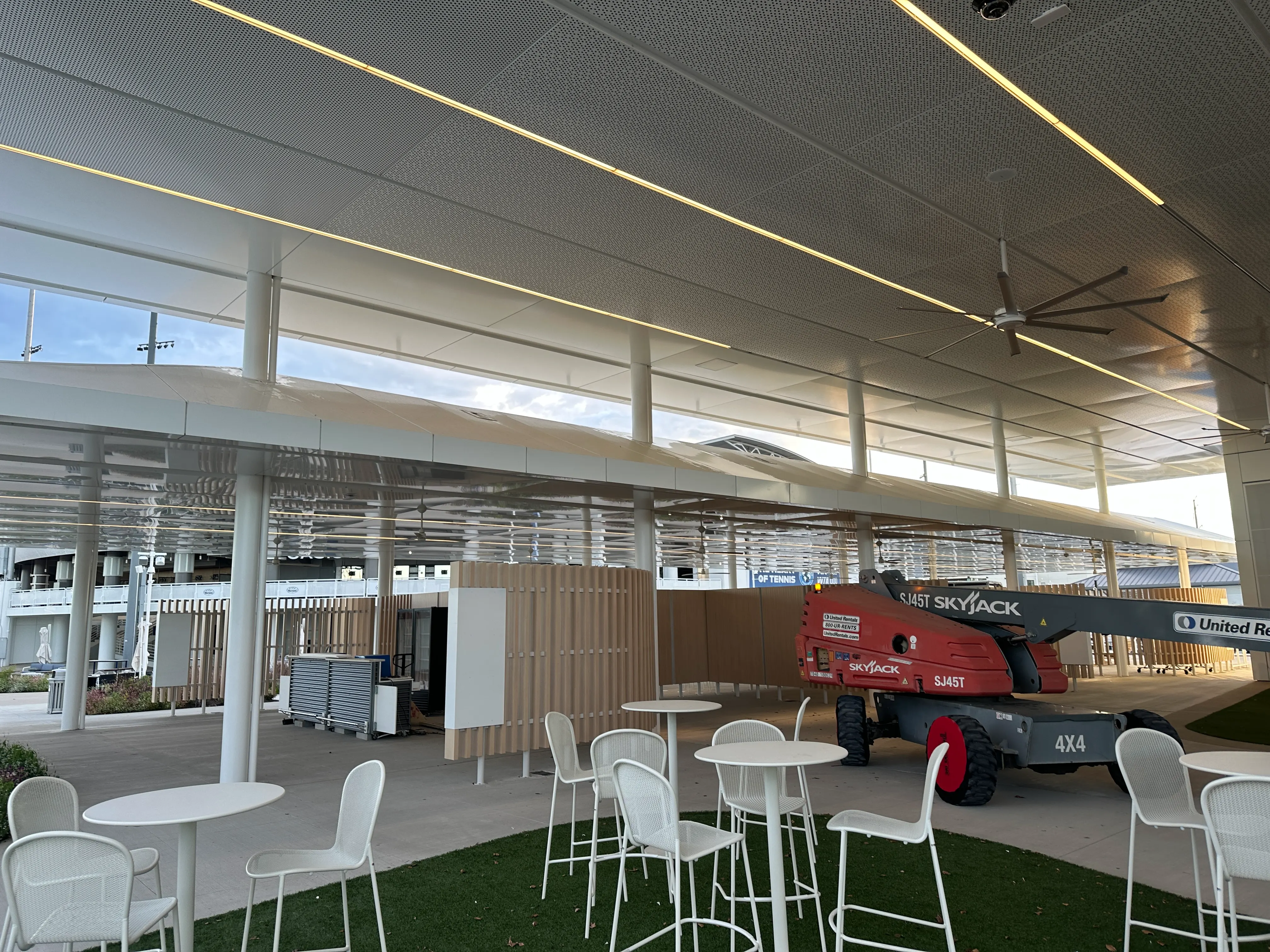
The most impressive shade structures make engineering look effortless. A great canopy or trellis may look simple, but beneath that simplicity lie engineering decisions about wind load and weather performance that must be incredibly precise.
That's the real challenge behind shade structure design. At the intersection of engineering and architecture, a beautiful concept only matters if it can survive a storm and hold its shape for decades. At Jones, we work as a design-build partner across façade design and architectural services. Our services are all-encompassing, which means the structural and aesthetic sides of a project never get separated.
Let’s break down what goes into shade structure design, how the aesthetic side reinforces brand identity, and how an integrated delivery model brings both together on real projects.
What Shade Structure Design Involves: Definition and Structural Performance
In a commercial setting, shade structure design covers canopies, trellises, cantilevered elements, and architectural shade sails. Each architectural feature is built to withstand heavy usage and local weather conditions. These structures sit at building entries, over concourses, and across outdoor gathering spaces, and they function as part of the building envelope (not separate add-ons)
Getting there starts with strong engineering:
Structural Analysis
Every structure must undergo wind load and structural analysis specific to its site for safety. If the calculations are off, a sail or cantilever that looks great in a rendering can fall apart in a windstorm.
Material Durability and Weather Resistance
Material selection has to account for long-term endurance and weather resistance. That means holding up to UV exposure and moisture over decades, and surviving temperature swings without warping or losing color. Here’s an example.
Code Compliance
Permitting and code compliance are just as important, and can become especially complex on multi-site projects that span multiple jurisdictions.
Building Envelope
Shade elements also have to coordinate with the contractor's scope, since structural attachment points and drainage often connect directly to the building's exterior systems.
The Aesthetics: Façade Design and Brand Identity
Architectural design runs alongside the engineering work to reinforce brand identity. Material choice, color, scale, and form language all provide opportunities for strong branding.
For multi-site or campus-scale programs, that visual language has to stay consistent from one location to the next. Your shade structures at one property need to be as on-brand as the one three states away.
In particular, canopy design and porte cochere design appear at building entries, which means they're often the first architectural elements a visitor actually experiences up close. Getting that first impression right sets the tone for everything a guest expects from the building behind it. Our Miana Wold Center project is a great example of how a custom mirrored canopy can serve a functional purpose and contribute to a development’s architectural identity.
How Integrated Architectural Services Deliver Both, Across Project Types
“Design intent” and “built reality” tend to drift apart when different vendors handle structural and aesthetic decisions without talking directly. Imagine one team creating the plans, another team engineering them, and a third team building and installing them. Each handoff creates an opportunity for mistakes.
When design-assist, structural engineering, fabrication, and installation all run through one provider, the people making aesthetic decisions stay in the loop with the people solving structural problems. Everything is in sync, from the first sketch through final installation.
We see the value of that model play out across very different project types. For example, a restaurant entrance needs a different visual tone than a healthcare facility entrance, even if both are solving similar shade and weather problems.
Partner With Jones for Shade Structures Built to Perform and Impress
A structure that performs flawlessly but looks like an afterthought undersells the building it's attached to, and a structure that looks stunning but can't survive its first real storm season isn't architecture. It's a problem waiting to happen.
Effective shade structures require equal attention on both sides.
We built our approach around solving this tension. Façade design, architectural services, and building envelope integration all run through the same team at Jones. Your custom shade structures and canopies move from concept to installation without getting lost in translation between vendors.
If you're planning a shade structure, canopy, or architectural feature program, whether it's a single entry or a multi-site rollout, we'd like to provide a quote. Contact Jones to get started!