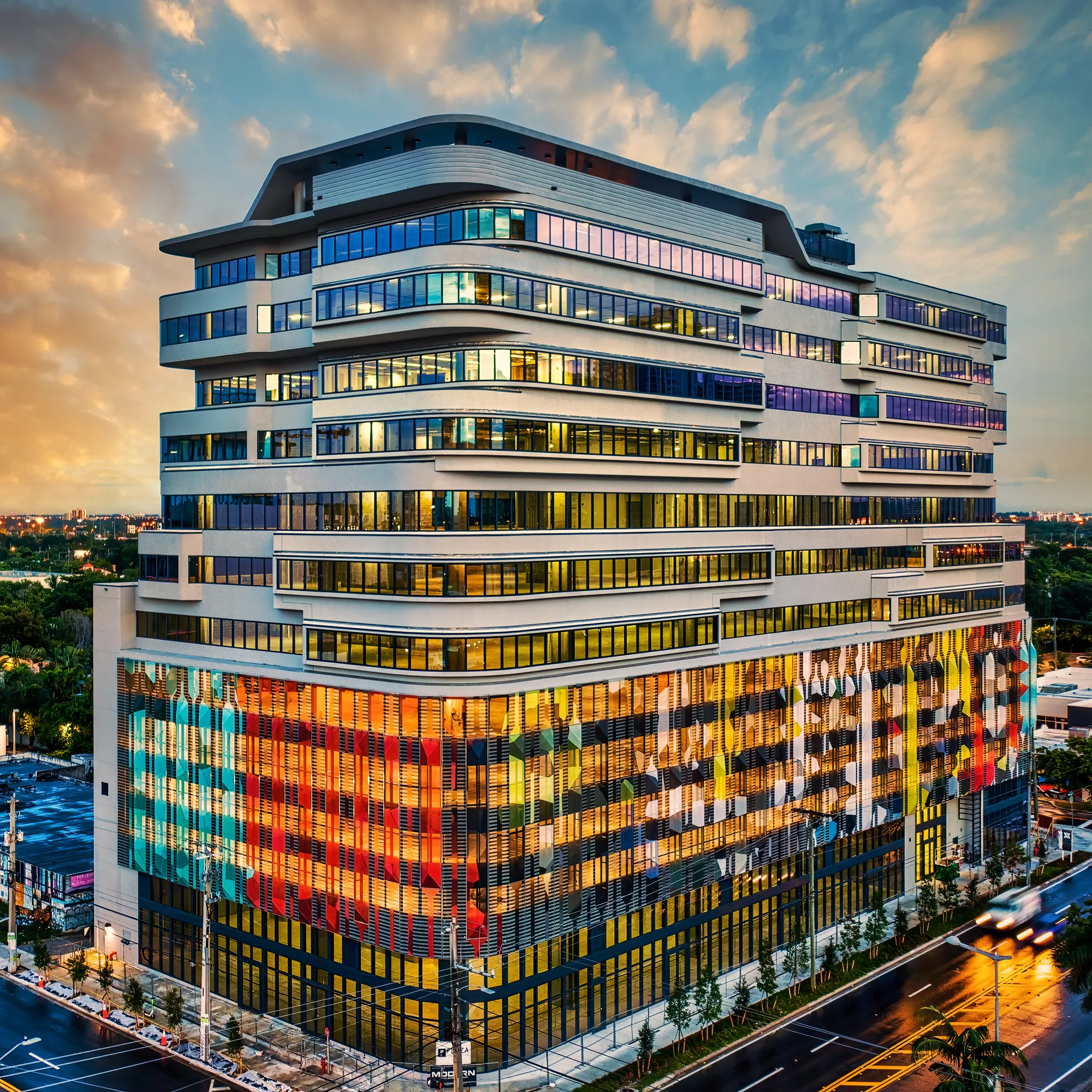
A building without a thoughtfully designed exterior is a missed opportunity. The façade is what stops people in their tracks and tells them what to expect before they ever interact with your brand.
Commercial building façades have evolved far beyond protective covering into powerful brand and design statements, defining how your property is perceived and experienced. And custom commercial façades sit at the intersection of form and function:- They shape a building's visual identity
- They improve energy performance
- They give brands a competitive edge
At Jones, we are a nationwide architectural façades firm that designs, engineers, and delivers custom systems built to perform as beautifully as they look. From concept through installation, we manage every stage of the process with the precision and craftsmanship that commercial architectural design demands.
In this guide, we cover the types of façade systems available, the benefits they deliver, why customization matters, and what to look for in a partner.
What Are Commercial Façades?
Commercial building façades are the exterior-facing systems of a structure. They are the architectural “skin” that connects your building to the outside world. Façades encompass cladding materials, glazing systems, structural framing, decorative elements, and surface treatments that work together to define a building’s brand.
Commercial façades also serve as the primary line of defense against weather, moisture infiltration, and thermal transfer. A well-engineered façade improves interior comfort by regulating airflow and reducing heat gain or loss, which translates directly into lower energy consumption and reduced operating costs.
At the same time, the right façade reinforces architectural intent and signals the quality of the environment within.
Types of Architectural Façades
Choosing the right façade system depends on the building's purpose, environment, and design goals. Each type brings distinct advantages:
Composite panels (ACM) are aluminum composite material panels consisting of two aluminum sheets bonded to a polyethylene core, offering a lightweight, cost-effective cladding solution that supports bold color choices and clean, modern lines across large surface areas.
Glass curtain walls are non-structural glazing systems mounted to the exterior of a building frame, allowing natural light to flood interior spaces while providing weather protection and contributing to the sleek, transparent aesthetic associated with contemporary commercial architecture.
Metal panel systems use fabricated aluminum or steel panels to create a durable, low-maintenance exterior that resists corrosion, handles extreme weather conditions, and supports a wide range of custom finishes and geometric configurations. View a striking example, here.
Mixed-material designs combine two or more façade materials, such as metal, glass, stone, and composite panels, into a single unified system, giving architects the creative freedom to achieve layered, high-impact exteriors that reflect complex brand identities and distinctive design visions.
Perforated metal screens are façade panels punctuated with precise patterns of openings that filter light, reduce solar heat gain, and add a dynamic visual texture to the building exterior while supporting sustainability goals in commercial architectural design.
Rainscreen façades use a ventilated cavity between the outer cladding layer and the building's structural wall, allowing moisture to escape, improving thermal performance, and dramatically extending the lifespan of the underlying structure.
Key Benefits of Commercial Façades
A custom façade is one of the highest-impact investments a commercial property can make because its benefits compound over time.
- The most immediate return is brand identity. The exterior of a building is its loudest brand statement. Color, material, scale, and form work together to communicate who occupies the space, what they stand for, and what experience awaits inside. For multi-tenant properties, a distinctive façade elevates the entire development.
- Functional benefits appear when building façades engineered with the right materials and systems dramatically reduce energy consumption by managing solar gain and thermal transfer. Buildings with high-performance façades see measurable improvements in interior comfort and sustained reductions in heating and cooling costs.
- Quality façade systems are durable, engineered to withstand decades of exposure to the elements without degrading, fading, or requiring significant maintenance, protecting both the structure and the property's long-term value.
- Perhaps most importantly, a well-designed façade shapes the customer and visitor experience before anyone crosses the threshold. It reinforces credibility and creates a strong first impression.
Why Custom Commercial Façades Matter
The best façades are not designed around what is available, but what is needed. That means every material, finish, and system choice ties directly back to the site, the brand, and the goal. The result is a façade that looks more intentional, performs at a higher level, and lasts for decades.
Customization also enables consistency across multi-location developments. For brands rolling out new properties across multiple markets, a standardized custom façade system ensures the visual identity remains cohesive from one location to the next while allowing flexibility to adapt to local building codes and climate conditions.
You can’t order that kind of façade from a catalog.
Material and finish flexibility is another decisive advantage. Custom façade systems open up a much wider range of options – such as metal panels, glazing, stone, composite materials, or a combination – so the final design truly fits the building and the brand.
Choosing a Partner for Custom Façades
Executing a custom façade at commercial scale requires engineering rigor, fabrication, permitting expertise, and installation capability – all working in coordination from the first concept sketch to the final panel installation. A gap in any of those areas leads to cost overruns, schedule delays, and quality compromises that are difficult to recover from.
The right partner brings it all under one roof. Here’s what to look for in a firm:
- A proven track record in complex commercial façade projects
- Engineering capability, including in-house fabrication
- Self-performed installation teams
- Permitting and code compliance are managed internally
Jones delivers all of this and more.
With 300,000 square feet of manufacturing space across multiple strategically located facilities, we have the capacity to take on projects of virtually any scope without compromising quality or timeline. Our installation teams self-perform every project, and our internal logistics program keeps delivery efficient coast to coast.
From a single landmark façade to a coordinated multi-site development program, we bring the resources, the systems, and the expertise to execute your projects at the highest level.
Choose Jones for Custom Commercial Façades
Before a customer steps inside a store, before a tenant signs a lease on a building, or before a visitor forms an opinion about your brand, the façade has already made an impression. You want that to be a strong impression, so don’t overlook your custom façade.
After all, it’s more than an exterior finish. It’s a long-term investment in identity, performance, and value. It shapes how a building is seen, how it functions, and how it stands up over decades of use. In commercial architecture, few decisions carry more weight or deliver more lasting return.
Jones is the trusted nationwide architectural features firm delivering custom commercial façade solutions built for the real world.
Contact us today to discuss your project and request a consultation.